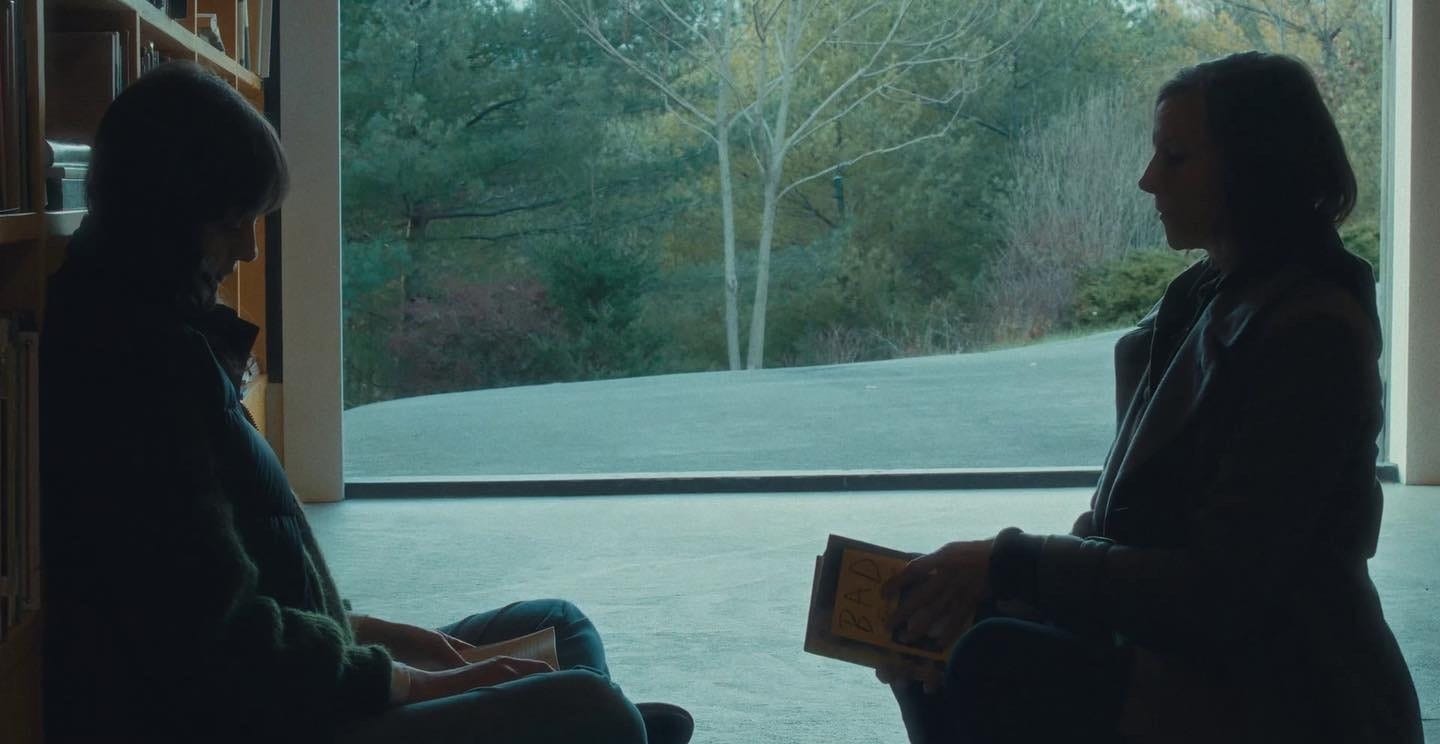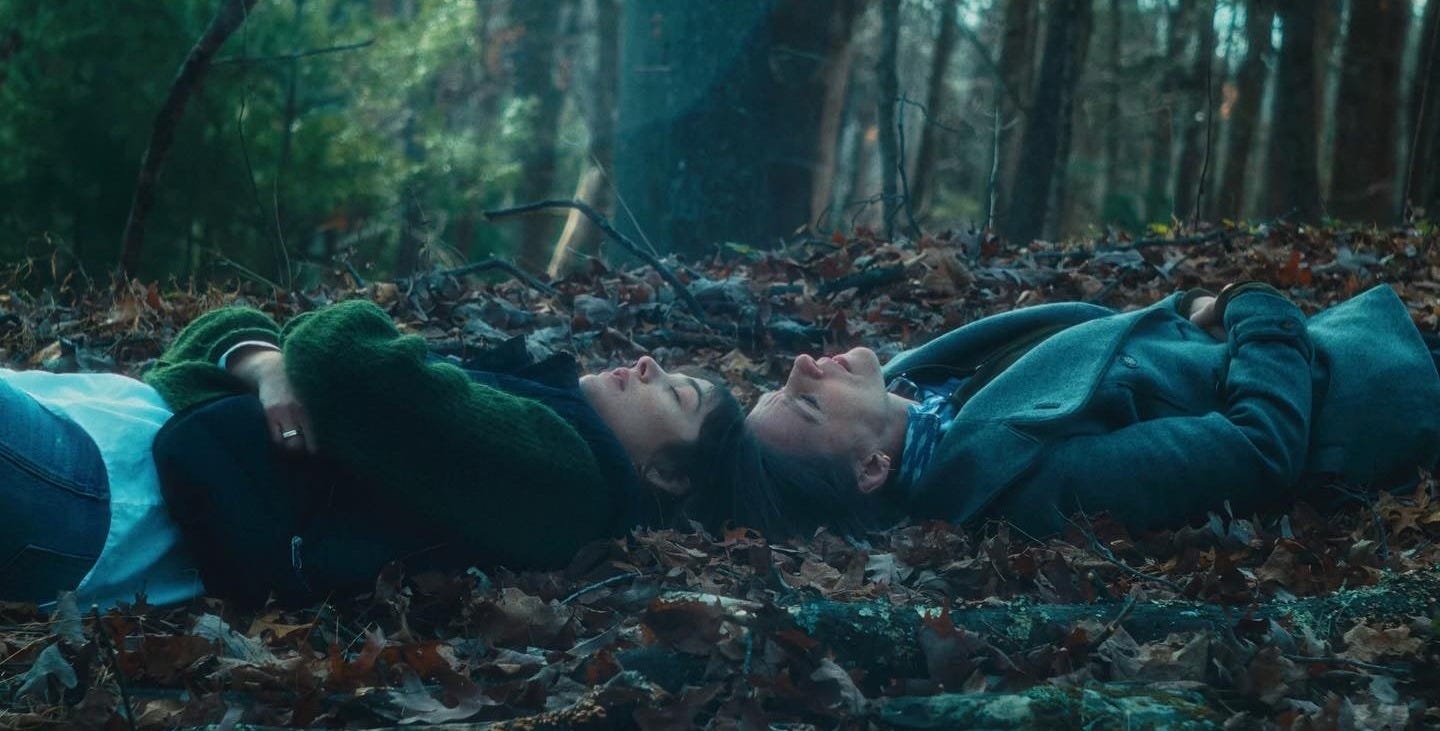
The best way to interview James Greer is to have no plan. His mode is always the discursive and recursive flow of a long conversation with an old friend, even back when I first met him as the author of novels like Artificial Light and most recently, Bad Eminence. His wiki is more varied than most. He was also a member of Guided by Voices, and screenwriter of studio comedies like The Spy Next Door. Lately his film work is more in tune with his literary sensibilities as he’s written the thrillers The Cure and Twisted with Jonathan Bernstein and has had a long working relationship with Steven Soderbergh, starting with 2018’s Unsane. In 2021 James heard I had taken up cinematography again—the pandemic killed a series development I had been working on for years as a writer and let’s just say I was one hundred percent available. He wanted me to shoot his debut feature, Mirror Moves and within a few weeks I was on a mountain in the Hudson Valley with my Russian lenses and a fog machine, making a movie in nine days about a woman learning far too late her husband is a serial killer.
With indie stars Beth Lisick, Cecilia Corrigan, and musician Hannah Cohen, Mirror Moves is streaming for free on Plexi and is for rent here. I spoke with James this month about our shoot and where Mirror Moves fits within his work. True to habit, we spent half our allotted time talking about the pros and cons of third wave ska before even getting to the interview.
JAMES GREER: But at least Rancid were pretty good songwriters. And they were entertaining to watch. But yeah, that was very hit and miss for me. I did not like Sublime.
BRIAN J DAVIS: All right, let’s talk Mirror Moves.
JG: A major motion picture that Brian and I did a couple of years ago now. We shot it, what was it, seven days?
BJD: There were at least two more days of pickups. So maybe nine days total of shooting? Still not a lot of time!
JG: There were a few self-imposed restrictions as well. We couldn’t really move the camera much because I didn’t want handheld stuff.
BJD: The great thing for me as the DP is that you had relatively just come off of working on Unsane. And you watched Soderbergh working with his iPhone setup. That meant that when you came to me and asked: how could we do Mirror Moves in a week? I was able to say without much arguing: let’s shoot it on a very tiny Blackmagic 4K camera. This is still one of my favorite shoots ever because it was the smallest camera I’ve ever shot on. And we just burned through it and there was none of the stress. And because of your Soderbergh experience, I didn’t have to explain why we could use existing lights. Or that, worst case scenario, I’ll bring one or two lights as backup.
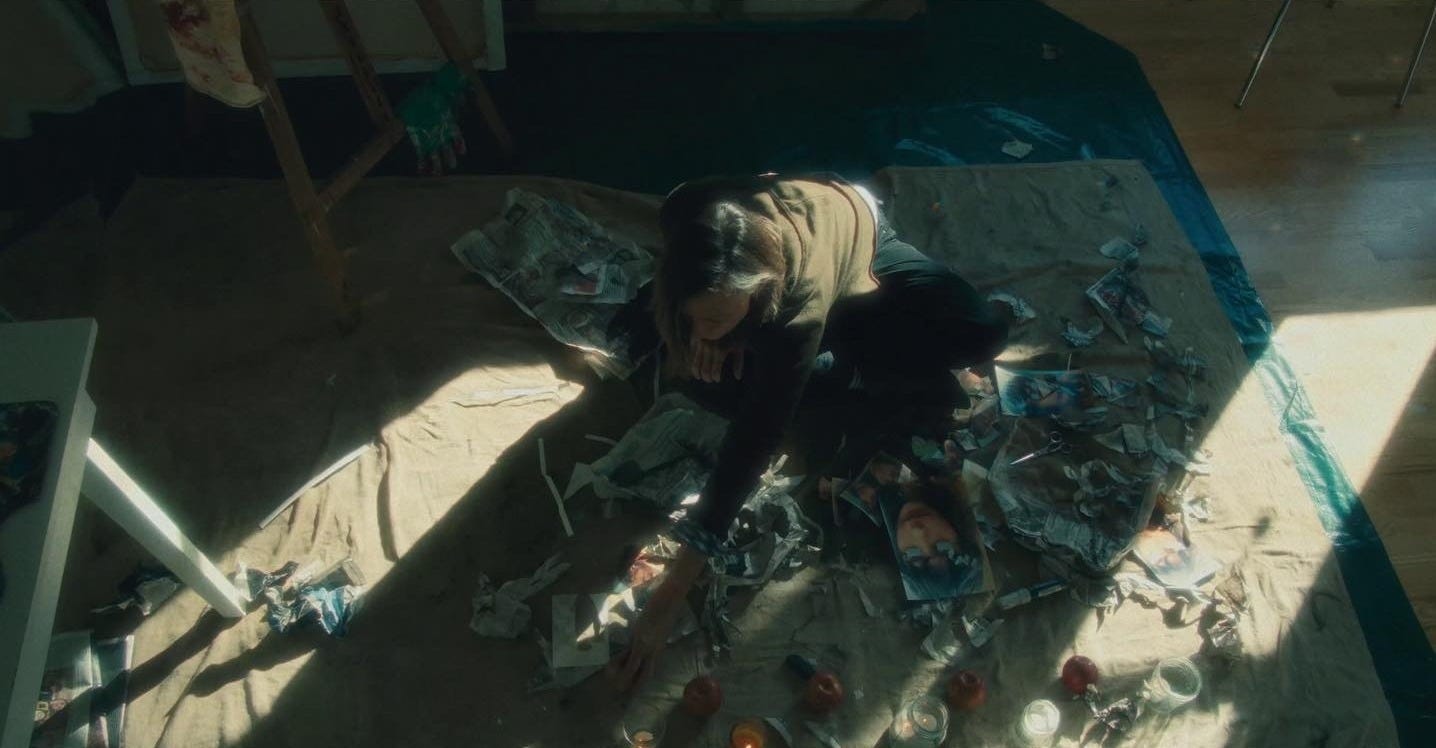
JG: Also, it was our lead actress Beth Lisick’s actual home that we shot mostly in and around.
BJD: I look back fondly. This is one of the chillest shoots I’ve ever been on. I think the only stressed person was me.
JG: You were the one-man camera department at that point, you know? On Unsane, it was still a million dollar production. Available light, but not all the time and we had two or three people swapping iPhones in and out. Mirror Moves was the low-budget version of that low-budget movie, to be sure. We had you, and on sound Gastón Martinez-Acosta. And Sophie Simpson, who did everything else.
BJD: I want to make sure you know how much you accomplished with Mirror Moves. When you work like that, with that small of a crew and that tight of a budget and shooting days, not a lot of people complete those movies and get it out there in the world. And when I say complete, I mean not just finished, but the movie actually works, in its own hermetic way.
JG: I deliberately made this one non-narrative and nonlinear and experimental in many ways.
BJD: Let’s actually go back then. I was brought in after you had secured the location in the Hudson Valley. But I wasn’t there for you writing it. I describe Mirror Moves to people this way: If Alain Robbe-Grillet had a show on Investigation Discovery.
JG: I did take the Nouveau Roman approach of deconstructing something and then putting it back together in a different way that hopefully presents a new way of looking at something. I had been reading a book about Gary Ridgway, the Green River killer. It might even have from the perspective of Ridgway’s wife, who had been married to the guy for 15 years. And this was all new to me as it happened in the Pacific Northwest and I had grown up on the East Coast. Obviously there was the band Green River, and this story is in the DNA of people who lived there. But no, he’s not fascinating. I mean, he’s a serial killer. Who wants to see or write or tell yet another serial killer story from the point of view of either the serial killer or even from the victim at this point? But he was a guy who painted cars or worked in a factory that painted cars, maybe trucks. He was never late. He had very regular schedules, and so no one suspected him. Apparently he was in a healthy relationship with a woman who had no idea that he was also a serial killer. So what seemed interesting to me was: what is going through her mind when she finds out.
BJD: And that was the genesis of the idea?
JG: As I started to write it, it just wouldn’t adhere to a normal sort of linear narrative. It was very difficult to figure out how to present that or how to dramatize that or even how to present it just in a way that wasn’t, I don’t know, boring or…
BJD: Like a police procedural.
JG: This was something I started talking about with Beth, which was right around the time of Unsane. We’d been talking about doing something together for a long time. I think since around 2010, when I did a reading tour with her on the West Coast that started in LA and went all the way up to Seattle. She had a performance side — I could tell that from when she was reading.
BJD: I realized a couple of days into shooting that I’d seen Beth perform way back as a member of Sister Spit—a punk feminist storytelling collective from San Francisco.
JG: And I thought she would be good in the role. You know, I didn’t want to hire someone who was primarily an actor.
BJD: Speaking as the DP, once the camera is on a performer like Beth, it’s like: this is going to be great.
JG: I had an instinct that that would be the case, so we talked about the idea and what I had in mind. There were occasionally times when our conversations would find their way into the dialogue. There were also bits and pieces from the novel that I was working on that would just find its way into the dialogue. Ultimately, the approach was always intended to be very much a nonlinear and nontraditional narrative way of telling the story. It ended up being even more so after we got into the edit, when I started to draw attention to the artificiality of what we were doing.
BJD: So I have a question for you on that front. As you know, I have film maniac taste so when you said during prep that it will be like a Robbe-Grillet film...I’ve seen four or five Robbe-Grillet films so I’m an instant ally! I think the most French New Wave shot in the film is Beth as Maggie sitting on this sort of ruined foundation wall. It looks like it could be an ancient fort in France, and then Beth is sitting on the ledge throwing apples down on one of the victims on the ground. I’m wondering if there were moments when the rest of the crew ever asked: what are you going after here, Jim?
JG: Not to my face! I think Beth and I had the most discussions in terms of what the approach would be and how we would do it. We also talked to Hannah Cohen, who played Violet, who’s a a representation of one of the victims, but also to an extent a manifestation of Beth’s character Maggie’s guilt. But also Maggie’s fascination and her fear of: I didn’t know about this, but did some part of me know about this, even though I didn’t know about this?
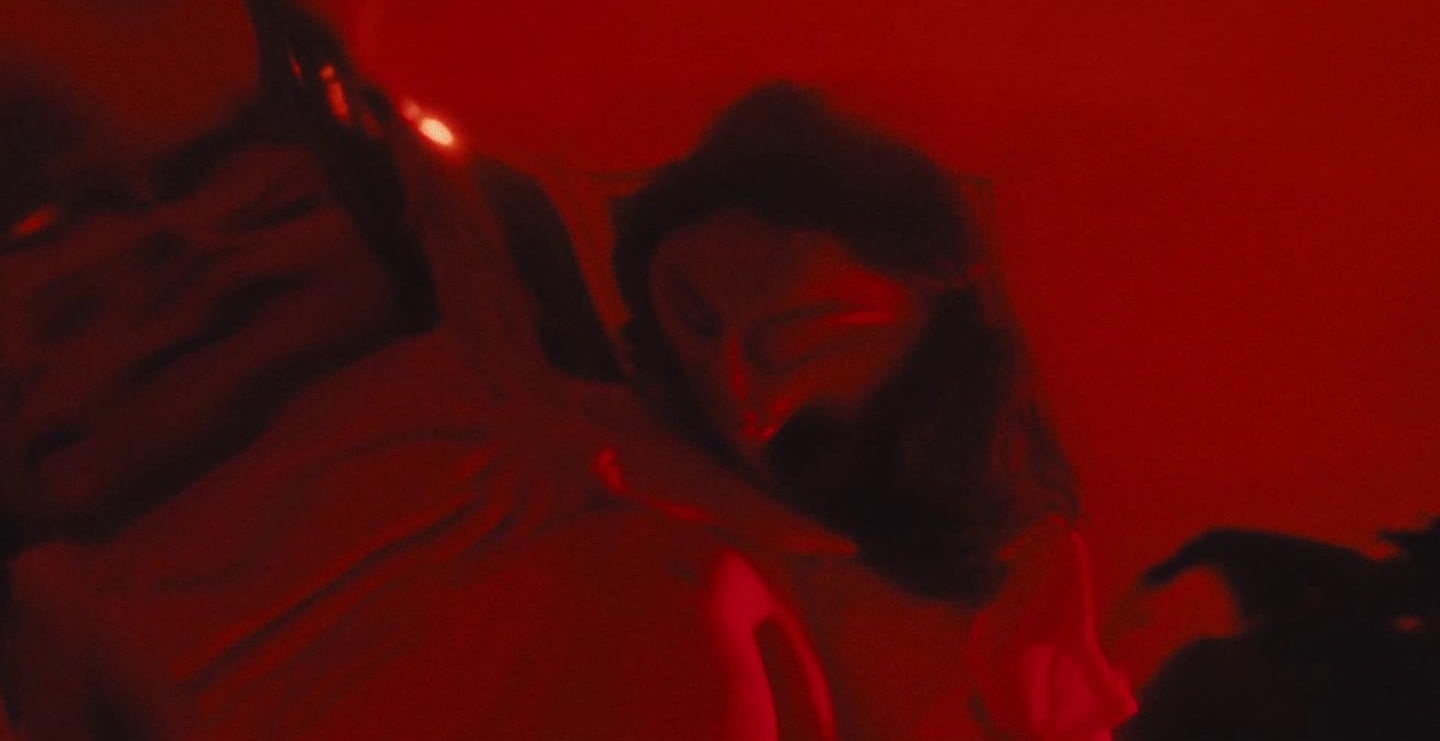
BJD: Is some part of me corrupted and I don’t know it?
JG: Yeah, and was some part of me fascinated and weirdly, darkly attracted to this side of myself and this side of my husband, my ex-husband? And I think that Beth knew that to an extent and... you know, Hannah knew that. But the rest of the cast and crew were all relatives and or local friends of Beth.
BJD: I think we did take over the Hudson Valley for a full nine days.
JG: So we just owned that joint. They shut the whole place down for us.
BJD: I think we should let the reader know where we were filming. It’s Beth Lisick and her partner’s house and recording studio complex, on…I was going to give a specific number but I’m terrible with acres.
JG: So am I.
BJD: It was acres of land on a hillside in the Hudson Valley. And it’s like a mid-century Catskills resort. And the entire region is full of these abandoned quarries.
JG: We actually wandered off her property for some shots and into what is state land, which we weren’t technically supposed to shoot on.
BJD: But this was a really atmospheric location that we had the run of, and that’s a secret weapon of the movie having this very cohesive character. And it’s all location: we would all wake up and just start filming.
JG: There was more stuff that we could have shot if we had more time. There was something cool to shoot every turn. The half existing tennis court that we shot on. That was fun.
BJD: Then I saw the swimming pool and said, oh, we’ve got to get that. It was covered with black water on the tarp and decaying leaves. That’s the one thing we had to talk Beth into. She was like, But it looks so much nicer in the spring!
JG: Oh, that’s fantastic.
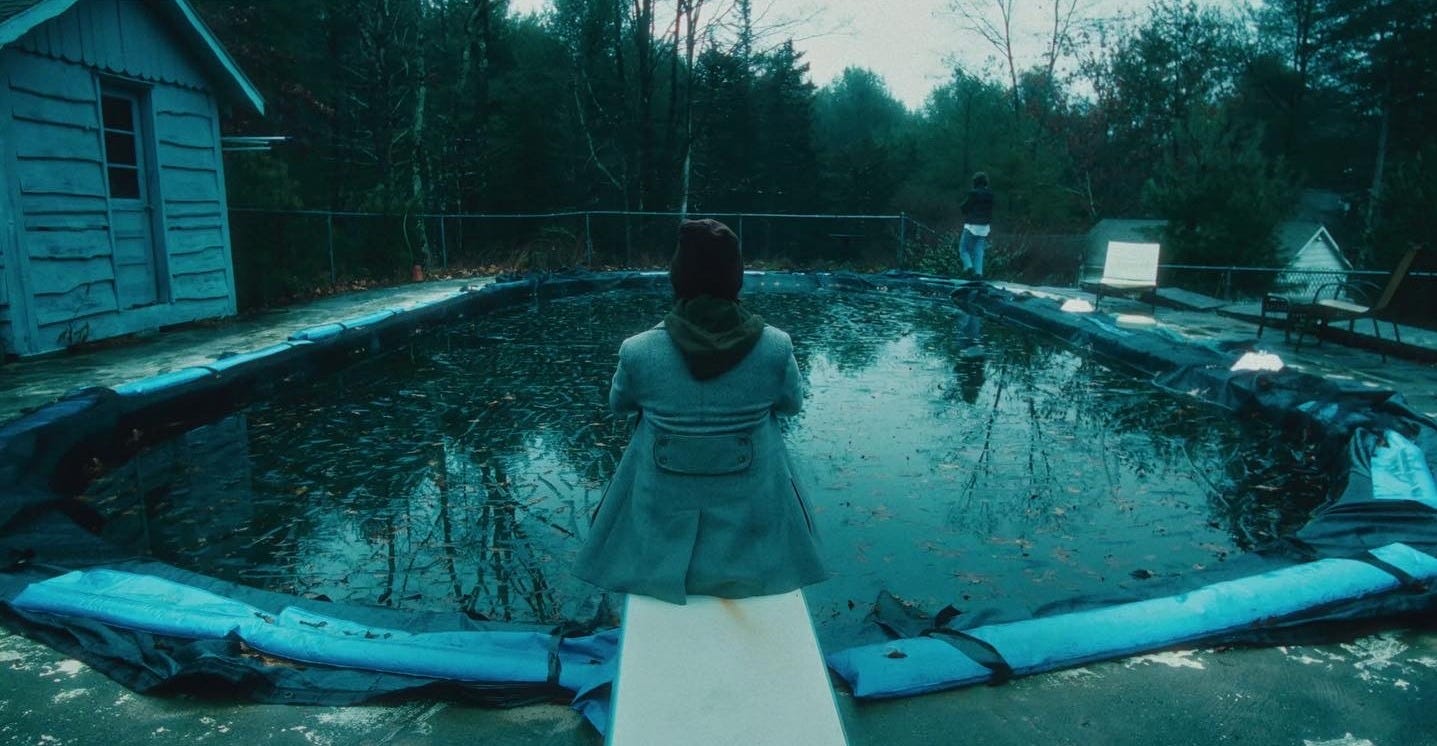
BJD: That’s the other thing. We shot into early December, and we were worried about the temperature and snow in particular. And the pool was one of our final shots of the main shoot. Maybe the last shot of the last day and just as we got it, it started to snow.
JG: I do remember that. But we would have worked it in if it had snowed.
BJD: You would put up some Christmas wreaths.
JG: It’s a Christmas movie anyway. There’s some talk about parthenogenesis in the movie. That’s basically Christmas in a nutshell.
BJD: You edited Mirror Moves for...a while.
JG: So yeah, the editing took a long time because first of all, you were editing it and then I had a different idea of what I wanted to do.
BJD: I think I realized first that I was wrong for the edit! But it’s true, what you wanted was wildly different.
JG: It wasn’t whether you were wrong or right. I was getting these ideas, but I couldn’t put them into words because they were impossible to explain. But then I had to learn how to edit.
BJD: And then you learned the secret: Editing is not that hard.
JG: I had help. Jesse Parker Hart, who was very helpful just in terms of being able to organize all the stuff for me so that it made it even easier for me to do. Also I gave them: Here’s 10 minutes. Here’s what I want. Here’s the sequence of things. Try this. Editing was probably the longest part of the process. That’s not atypical in filmmaking, except I was coming from the experience of working with Steven, who edits while he shoots.
BJD: Wait. This is hilarious. I’m actually getting text messages from a short film producer. I’m doing the sound mix for a 15-minute film and it’s been in edit now for seven months!
JG: Yeah, I mean, I get that.
BJD: Do you think you’re going to direct another film?
JG: I want to do another film. I just don’t know which. It’s also a question of, I don’t really want to ever finance a film myself again. It’s never a good idea.
BJD: We wandered away from this before. But I want to go back to what you would change, if anything, about Mirror Moves?
JG: I did show it to Steven Soderbergh and the one thing he said about it in terms of the way it’s constructed is that I should be mindful going forward about the difference between creative ambiguity and confusing the audience. He’s very much on the side of not confusing the audience. Whereas I am on the side of...I have no problem confusing the audience. And there’s not one specific point I’m trying to make. Even when Steven’s formally more experimental, like The Limey, he always makes sure it does make sense for the general viewer. Which is not something I do. Just as in any of my novels, I delight in confusing people. That’s immature and I should probably stop doing that.