



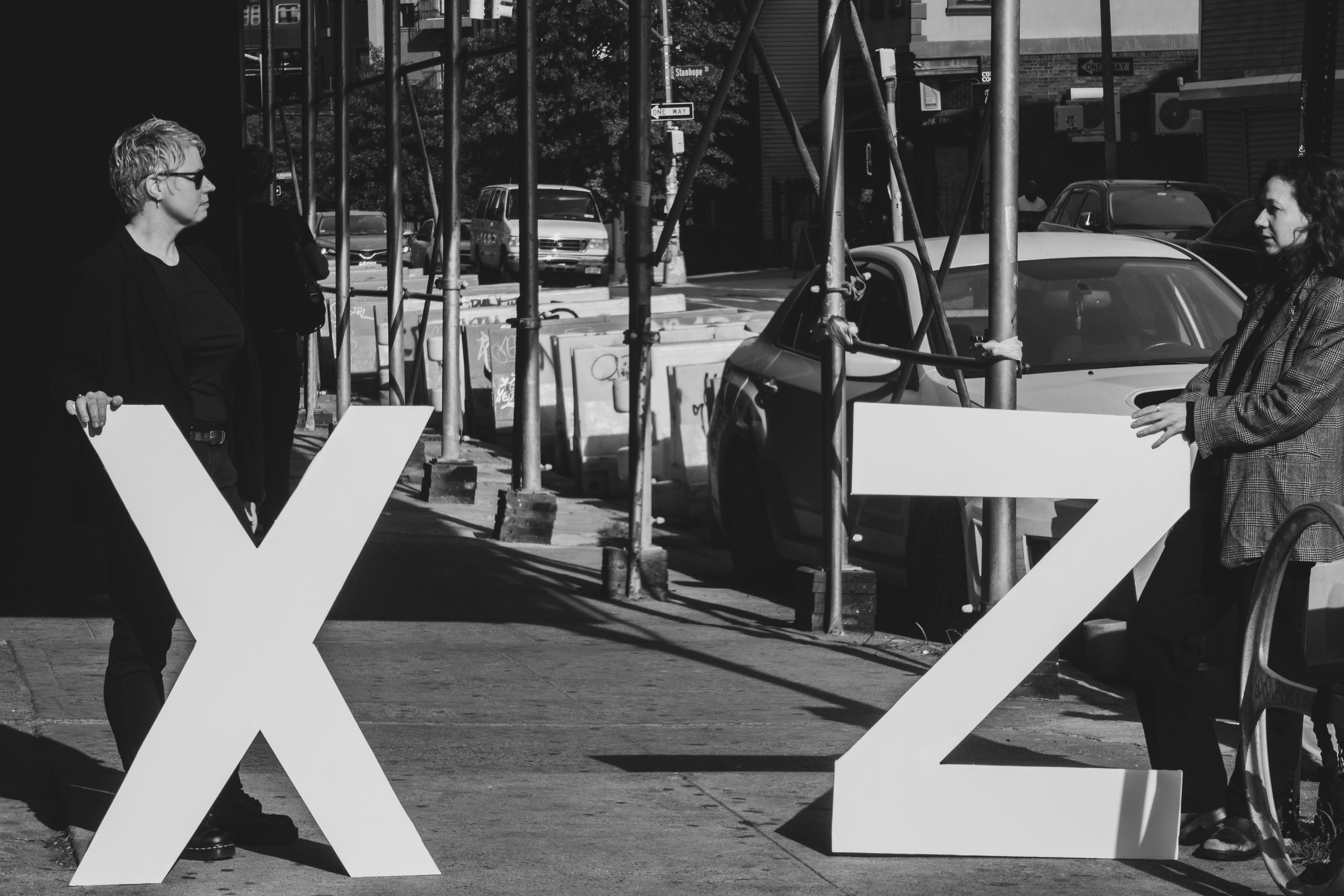
In spring 2023 Hannah Meyer was 26 and living with a girlfriend when she had taken to DMing semi-strangers and asking them for coffee. Emily Schultz was one of the semi-strangers. We first met at a literary reading on a cold night and Hannah assumed we would get a single coffee, exchange a handful of messages, and that would be it. Instead, it would be two years before we would break up and eventually start writing this article together, processing how and why our age-gap relationship happened.
A San Francisco by-way-of Boise, Idaho transplant, Hannah was due to start the MFA program at NYU. Emily was 49 and just about to publish her fourth novel. Hannah was surprisingly nervous on the first date. Emily asked her what she wanted to drink and told Hannah to find somewhere in the café to sit. As Emily ordered coffee, Hannah pretended to rifle through her bag, eager to give her hands something to do. “I might as well have mouthed peas and carrots like a background player.”
Hannah and Emily talked about writing, queerness, and art modeling. Emily let slip that her marriage was open. Later Hannah wrote in a novel she would send to Emily to read, “I felt the particles between us condense and quicken.”
Within 30 minutes of leaving the café, Hannah had texted her cousin, asking:
How old would u date?
Not sure. Sixty? No, too close to my parents age. Are you seeing someone older?
Maybe.
Send pic.
Not sure how old she is.
SEND PIC.
Hannah sent her a photo and she approved.
Emily had been out as queer since Hole’s “Miss World” topped the alternative charts. She later partnered with a man, Brian, and then felt a little bit invisible. When she became a mother, even more invisible. After the pandemic Emily and Brian had decided to open the relationship again. They’d done so a few times before, sloppily, and well before polyamorous jargon was popular. Back then they were just slutty and unusually honest about it. Now, they agreed to solo-date (meaning they wouldn’t date the same person). One of the mature things they discussed this time around was what if something became love? “We’d try to have that person be part of the family,” Brian said. “How?” Emily asked. They didn’t exactly hash out a plan.
Emily had her old radical beliefs that love shouldn’t be possessive, while Hannah was fluent in contemporary relationship discourse. But for Hannah, the age-gap attraction went deeper than politics. It spoke to her first inklings of being gay. “I was 12 at the time, and the first woman that I had a crush on was born in 1975. She was my voice teacher. I didn’t know exactly how old she was then, but I knew that we were certainly of a big and legal age difference. I would bike downtown hoping to run into her. It was a romantic blueprint because I admired and was attracted to her.”
After making out with Hannah on the lawn of the Ramble one afternoon, Hannah revealed her age: 26. “Twenty-two years difference?” Emily said as she sat up. “You are the age of my abortion.”
At first, Hannah had referred to herself as a “late Millennial” and Emily did hopeful math. That could mean early thirties, she thought. After making out with Hannah on the lawn of the Ramble one afternoon, Hannah revealed her age: 26. “Twenty-two years difference?” Emily said as she sat up. “You are the age of my abortion.”
When Emily told Brian Hannah’s age his eyebrows raised for a long beat, then he laughed. “You got yourself a cub!” But Emily hadn’t forgotten less positive age-gap references, like her own when she was 20 and dating a person in their thirties. Then there’s Marc Maron’s “Doomed Clown” stand-up bit.
The bit goes, “I hate when people see an older dude with a younger woman, like, ‘I know what that’s about.’ No, you don’t…If you ever see an old guy with a younger woman, just picture him as a doomed clown.”
Doomed clown or not, there was something about Emily’s dark Gen X sensibility Hannah was drawn to. She might admonish Emily about her molestation jokes when showering together, but Hannah could look into Emily’s eyes and see countless wars protested, economies collapsed, hopes drained like a bottle of Fruitopia.
We introduced each other to new music. Sometimes it took and sometimes it didn’t. Emily took Hannah to a Patti Smith show one New Year’s—“Hannah was a bigger fan and knew more about her than I did. Once, I texted her a cover of Bruce Springsteen’s ‘I’m on Fire’ by Electrelane. My grandma likes that song, she texted back.”
“Emily had experienced many things that I hadn’t. A C-section. Back tattoo. Marriage.” Hannah secretly assumed Emily was going through a mid-life crisis. A spiritual reckoning. Marital problems. Why else would she want to have sex with a 26-year-old on a beanbag chair in her writing office?
From the start, Emily saw Hannah as smart, talented and ambitious. In her journal she also troubled over what Hannah might want from her: networking or a novelty thrill. “I always thought a more interesting version of The Graduate would be from Mrs. Robinson’s perspective,” Emily said. “I didn’t know I’d end up living it.” (Emily first saw the film on VHS. Hannah first watched it on streaming.) We began the relationship with a lot of optimism, but Emily realized she had never felt so old before. Trying to keep up was thrilling, but exhausting.
“I didn’t know what I was or what I could be to her,” Hannah continued. “Emily said writing was like an addiction for her, while I second guessed every third sentence. Writing, like love, like everything else in life, seemed to come easily to her. The only thing that I was better at was running.”
“I should’ve known something was up then,” Emily says. “I was hoping for a jog and talk at the McCarren track, but Hannah decided to smoke my ass.”
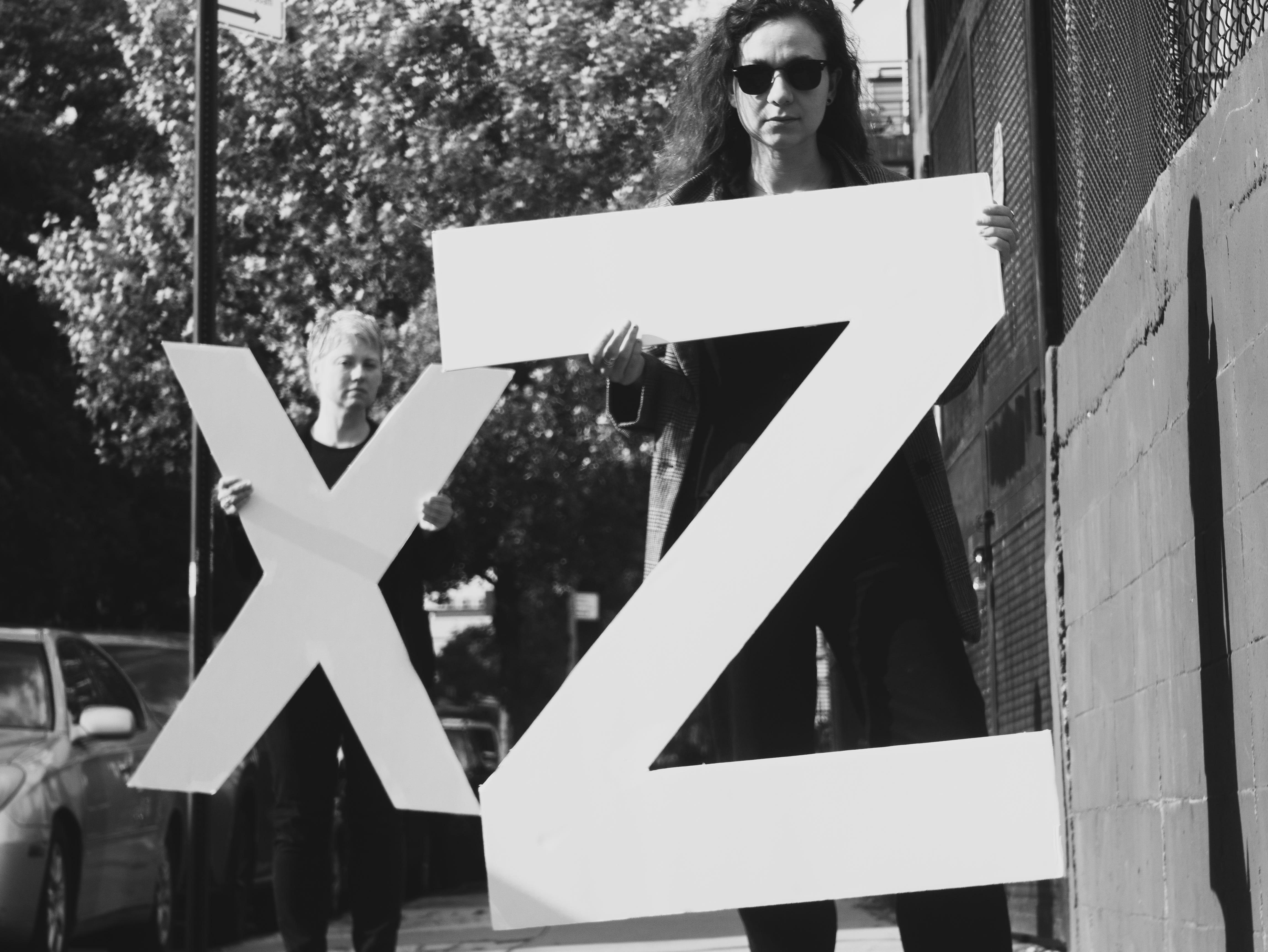
The biggest change in the first year of our dating was when Hannah became “single.” She broke up with her girlfriend and moved into an apartment in Bushwick, Brooklyn. While sex on a rock in Central Park was on Emily’s bucket list the reality, and arthritic pain, of these hookups was more uncomfortable than the fantasy. Emily looked forward to spending time at the apartment but realized this too could also get complicated. “Hannah was now in an apartment with three roommates: bartenders, baristas, and young men recovering from Mpox. To be fair, it was exactly how I’d lived in my twenties.”
“I never lived with a bartender,” Hannah corrects.
“What did that one girl do, the one who tried to steal my bagel?”
“She worked at the UN.”
One evening we were lying in Hannah’s bed, post sex, talking about books and writing. “We were in the slow stages of getting dressed when we heard voices. ‘Is that your roommate?’ I asked. When we walked out to the living room, I saw a guy in their kitchen. He looked around my age. That’s not a guy, that’s a dad, I realized. I wasn’t meeting someone her roommate had brought home—but her entire family. Don’t shake my hand, I thought. Thankfully no one else did.”
Hannah was also on dating apps, looking for someone more full-time to come into her life. She wasn’t ready for what came with dating someone whose time was taken up with a child. “I felt there were rules. Stated or not,” Hannah said. “We could text at certain hours. Hang out 1-2 times a week. And sleepovers were rare. I am not a particularly jealous person, but became incredibly jealous of her and her life. I both wanted her and wanted to be her.”
Psychologist Justin Lehmiller writes that a significant predictor in happiness in age-gap relationships is how other people perceive the relationship. Among Hannah’s friend group Emily was known as “Hannah’s Mommy Girlfriend.”
Emily’s son met Hannah and we tried to do movies and museums together as a way to bond, but our trio didn’t really get the ah’s and nods of rainbow family approval that one gets in New York. Instead, people saw Hannah as the older child when we were out together.
Despite the complexities, Hannah and Brian had become friends. (To Emily’s consternation they have exactly the same boundary pushing personalities.) “I now had three people to make happy,” Emily realized. “It’s easy to assume the person with two partners is getting double benefits from the situation. The truth is multiple people are asking for consideration at the same exact time.”
Over time, Hannah realized her own insecurities prevented her from seeing Emily clearly. In her mind, she did fashion her into Mrs. Robinson. “An older woman who was using a younger man to sublimate. I rewatched the film midway through our relationship and was struck by how mean Mrs. Robinson was to Benjamin.”
Given all these pressures, Hannah and Emily broke up…for a day. Brian ended up sitting them down for a counseling session, telling Emily and Hannah that to succeed they had to find the overlaps in our lives and focus on those. “The big thing in common would be writing but as I learned in these talks for the article after, Hannah was intimidated by my career,” Emily says. “I didn’t understand—I saw we had no reason to compete.”
In September 2024, Hannah and Emily’s family traveled to Provincetown, Massachusetts for a long weekend. It was an attempt to prove this relationship structure could work. We all stayed in a two-bedroom cottage near the ocean where it was post-season idyllic, yet Hannah wondered how the dynamic would evolve had we all been there for three weeks or three years instead of three days.
Hannah and Emily played with her son in the pool then dropped him off with Brian before heading to the beach to watch the sunset and smoke pot. “I was shivering after the pool and Brian had given me his Irish fisherman sweater to wear.”
Behind an abandoned boat on the beach later that night Hannah was feeling too stoned. “I was extremely conscious of the parts of my body that were touching sand and the ones that were touching Emily’s skin. While we were having sex, I became conscious of the fact that I was only wearing Brian’s sweater and my socks. After, Emily seemed nervous and I became nervous.”
“I was actually hallucinating spiders in the sky,” Emily amends.
For Hannah, this last trip was one time in a handful in which our roles were reserved, in which Emily seemed much younger. “I felt panicky and aware that she was higher than I was, so I gave her my own solid option, ‘Do you want to go inside?’”
Normally, the sexual and the familial were separated by a 45-minute drive between Greenpoint and Bushwick, and now the distance was a five-minute walk from the beach to the cottage. “I kept trying to swallow my lips to keep from laughing. Their son was sleeping and Brian immediately seemed to read the situation. Emily: really high. Me: Less high but unable to formulate a plan. He put on the TV and settled on The Lost Boys, according to Emily, ‘a Gen-X classic.’”
And there it was for Hannah. She saw an intuition and understanding of another person that she did not have with Emily or anyone else at that time. Hannah recalls, “Ironically, the closer that I got to Emily’s family the more I wished I had already found a primary partner. It was difficult to observe a solid life partnership play out in front of you and not feel as though your own chance was slipping away.”
Realizing from this vantage point that maybe she wasn’t poly after all Hannah can admit, “I was only able to have feelings for one person. The real problem was that I wanted a wife and I didn’t know how I would find one.”
The tragic thing about all breakups is these kinds of obvious reasons only present themselves after everything is done. Lacking clarity, our relationship limped along for a few months after the trip, then we broke up for real.
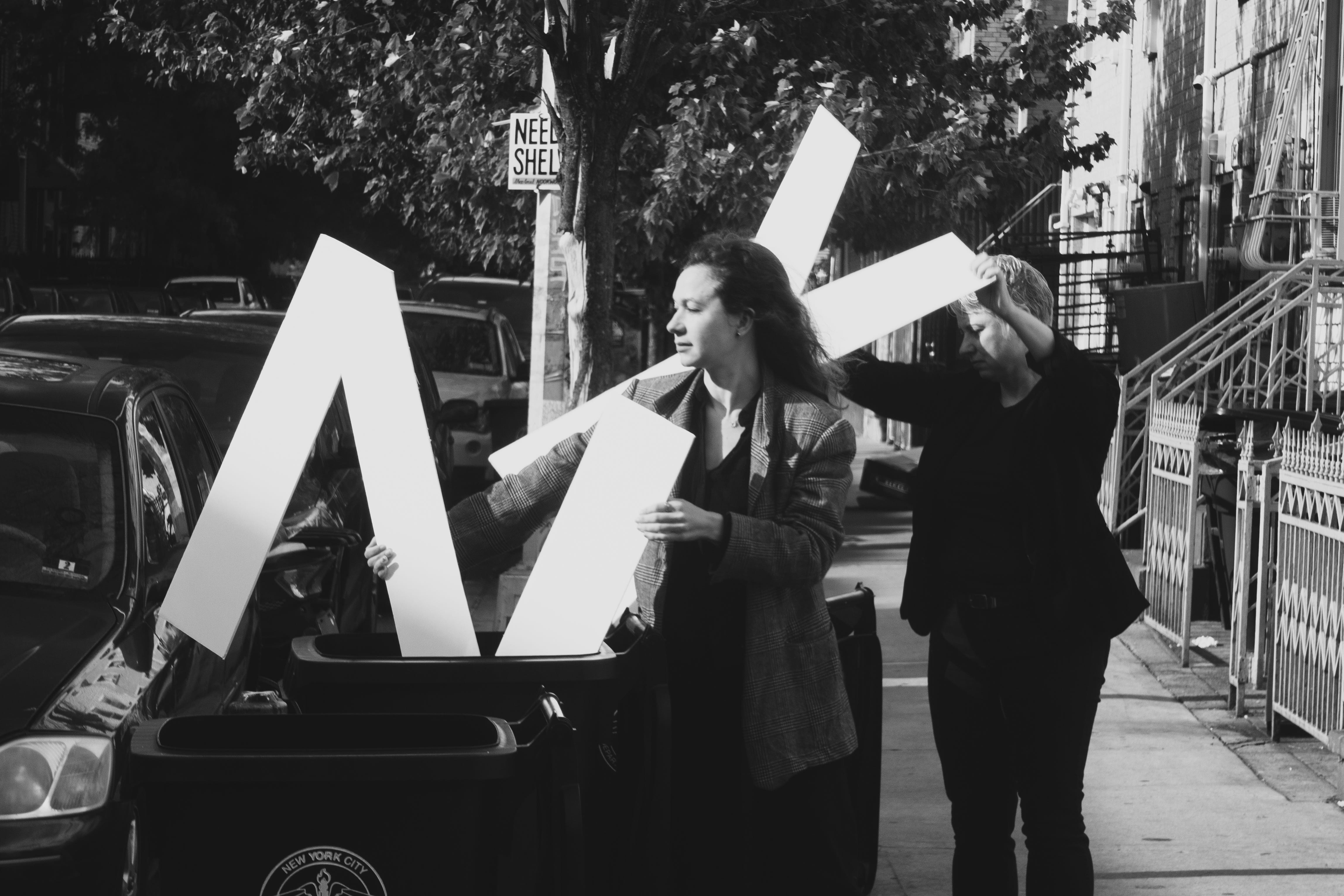
Besides the poly stress, one of our biggest challenges was our different communication styles. Hannah had a cell phone from age 12 on. Emily grew up with a landline in the family home, and wasn’t allowed more than a 20-minute call. Hannah likes to diagnose and analyze whereas Emily prefers to treat feelings like a Midwesterner talking about the weather: worth remarking on but not for long. Hannah says, “When I texted asking her how are u feeling? She would say Good if she was feeling positive, and Okay if she was upset. Emily preferred ‘not to get into it’ in text.”
In the deepest part of our relationship, we each wanted the other to be our age, to see the world as we saw it.
A year after we broke up, Hannah was graduating from her MFA. The room at NYU was bright with energy that day and Hannah thanked Emily from the stage before she gave her reading, “Which of course she nailed, making everyone in the room laugh and lean in. I felt elated for her to have this moment,” Emily recounts. “Her father David and I sat together, meeting for the first time in the three years of knowing Hannah. I was surprised at how kind he was; I hadn’t expected her parents would accept me, even as the now-platonic much older friend. Although I was nervous, he was an easy person to feel comfortable with and converse with, just like Hannah. Afterward at drinks, he said to me, ‘I want to thank you for being there for Hannah.’”
Emily was touched by the acknowledgement and she realized the problem with the Mrs. Robinson narrative is that it ends abruptly, without understanding of who Benjamin and Mrs. Robinson were as people, what they gave each other before moving on in their lives. She hadn’t been able to give Hannah everything, yet with her father’s words, Emily saw that she had at least been able to give something.
Looking back Hannah says, “One thing that Emily said to me was how in long relationships, there are old, long-standing resentments about things that you never bring up. On one hand, this feels generationally opposite to how I was taught to approach relationships: by talking about every little thing. Now I think there is something to be said for accepting a person’s flaws and limitations and taking them as they are.”
When questioning her continued desire to date “the olds,” as Hannah still calls them, she wondered if what she enjoyed was their experience, the lack of tentativeness. Emily always thought her lifestyle as a novelist made her less mature than her peers, but she is starting to accept that experience displaces youth, no matter what.
In the deepest part of our relationship, we each wanted the other to be our age, to see the world as we saw it. A fantasy, since neither of us would be who we were if that could come true.
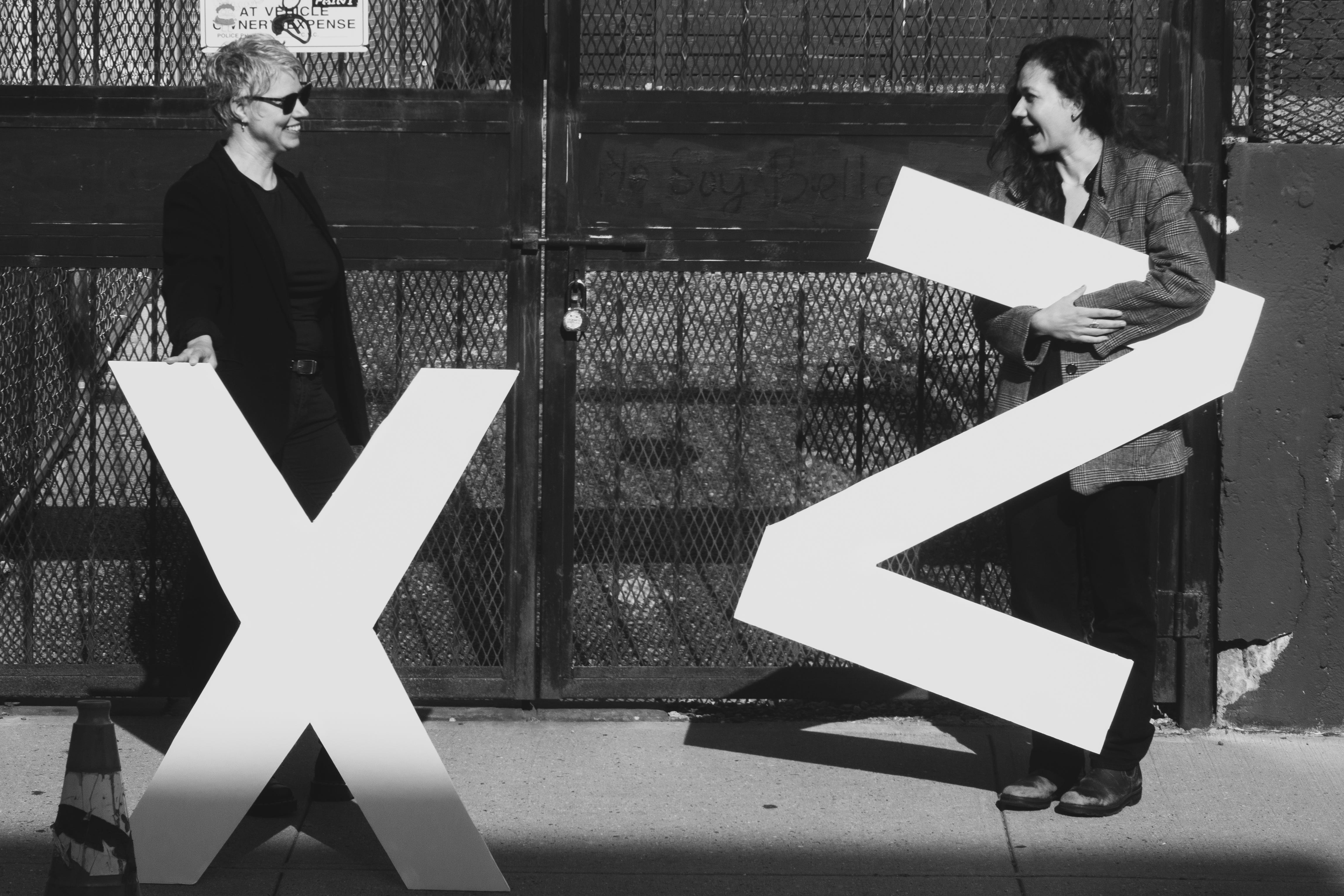
Hannah Meyer is a writer from Boise, Idaho based in Brooklyn. She holds an MFA in Creative Writing from New York University. Her essays and short stories are published in Hobart, Literary Hub, The Los Angeles Review of Books, Lilith Magazine, La Petit Mort, and elsewhere.
Emily Schultz is the author of the novels Little Threats, and The Blondes, which was an NPR Great Reads selection. Her forthcoming novel is Miss Psycho. A cofounder of Joyland Magazine, her writing has appeared in Elle, Slate, Vice, Writer’s Digest, and Prairie Schooner. She lives in Brooklyn.