



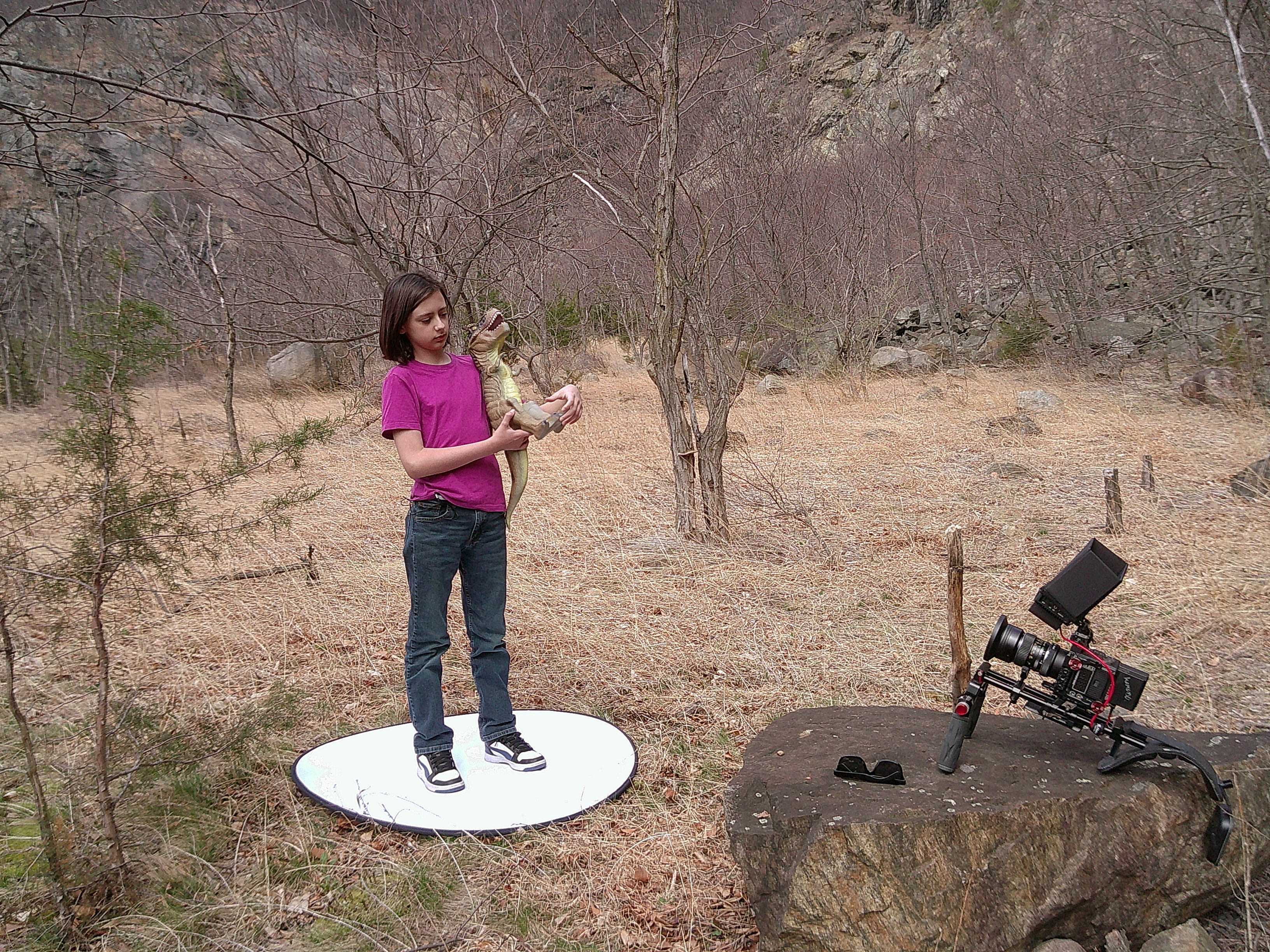
If you’ve read this newsletter for a while you might know that we have a son named Henry, and Henry is autistic. Nothing has changed our creative lives like Henry has, but we generally don’t foreground that in our conversations or professional talks. We made the decision long ago to always try to put Henry’s voice first and make sure his struggles and hard work, going from nonverbal to speaking, mattered more than anything we experienced as parents. But as Henry has grown older, his agency has also grown. One of those ways has been through filmmaking, where he’s learned the tools of communication, storytelling, cooperation, and flexibility. (And the occasional star fit—also an important skill.)
Three years ago Brian came back from a two-week location shoot and Henry, then eleven, asked “Can I make a movie too?” We gave him a budget of $100 and a choice of neighborhood locations in Greenpoint, Brooklyn. He sat beside us and, with a few prompts, wrote script directions and suggested dialogue. Henry’s biggest inspiration was The Bad Guys book series, resulting in his own self-contained mythos, which is now at thirteen installments of freeform genre mashups. Like his inspiration, the Australian writer Aaron Blabey, Henry is aiming for twenty volumes. Perhaps not coincidentally, Henry and the Last Dinosaur 13: The Land Down Under is set in Australia. Though we filmed it in an old quarry in the Hudson Valley.
Early on, Henry began to build his life around film. (Wonder where he picked that up from?) Time had been a hard concept to grasp due to his autism and he used to hate it when we looked back at old photos. If we talked about the past, he would proclaim, “Back to the future now.” But writing down film release dates on the calendar for movies he wanted to see became his own understanding of how time works. Making films, and putting up with everything from our scheduling to waiting for batteries to charge, has taught him what time is: patience and effort.
While making his first films, dialogue was still difficult for Henry to perform and we had to help with voice over. Three years and many episodes later the budgets are still—mostly—$100, and filming days last about one hour of acting for him. But Henry is performing all his lines now and there is one more important milestone to this episode. This is the first script that Henry wrote completely—so we held back on adding notes like, “Are you sure you need another dinosaur battle?”
With the exception of a few improvised Australian beer jokes here, this is all Henry. We asked him for a message to the viewer, and he said: “Thank you! It’s awesome you’re watching my newest and latest release. I hope to see you again next time.”
He just came back to add, “Please subscribe to my channel” because he is our child.
Many thanks to Hannah Meyer, Olivia Jampol, Roberta Colindrez, Jennifer Makholm, and JD Davis for their help over the series.
I've never hit subscribe so fast in my life! I am going to watch all of these with my kiddo.
I love how thoroughly you love & support your son, this is what it’s all about 💖